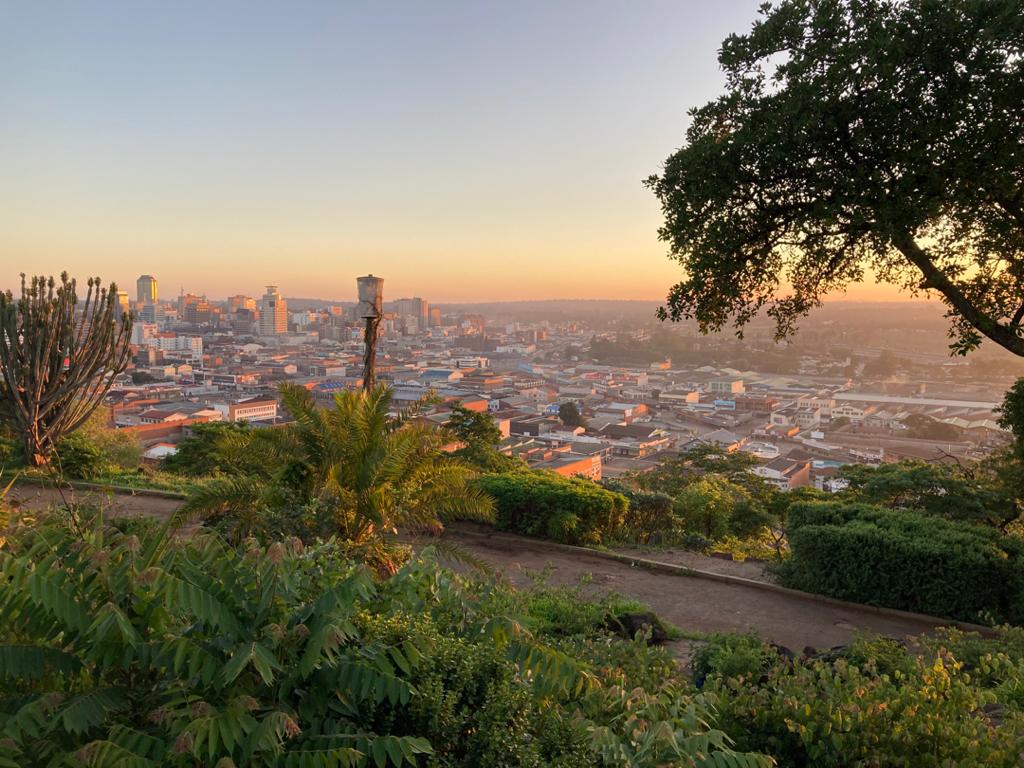
Hey Citizen! Yup, that's you, the name for a "city dweller".
This post is going to go quite deep and expose some of the values and beliefs you may hold. Or the way you parent. Ok, maybe it won't. That's ok. Bear with me as we explore the city in a way that touches on developmental, physical, psychological, social and environmental factors, as well as, the personal attachment to our kids, and things. It's a chance for an alternative view to discover how you think about your child's daily life in Harare, and to question "what do people do all day"?
The 1970s Dutch knew very well that there's no stronger force for change in a city than a parent. It was then that Vic Langenhoff's six-year old daughter was killed cycling to school. In grief, he founded Stop de Kindermoord (Stop the Child Murder) - a movement that changed the entire trajectory of transport planning in the Netherlands, prioritising people. A city can be the perfect setting to challenge a society’s unchecked practices - small enough to spark action, large enough to be counted.
Ok, so why am I telling you this? The title is Childhood Mobility in the City of Harare.
Streets have been prioritised for high-speed machines at the detriment of children. This is no different in Harare. Children's horizons are shrinking. Few have schools within walking distance. The school bus no longer exists as policy. Planning happens in offices, usually by men, who may not fully understand how children need to navigate their neighbourhoods. (Let's be honest - I wouldn't be the only person to assume that Zimbabwean men are not usually the caregivers). So why is it problematic that children cannot mobilise independently in their city?
There are a number of reasons as to what is preventing safe childhood mobility. One reality is that our city is too big (961 kilometres squared) to cover the daily distances needed for the places we need to go. Our city is not viably walkable. Yet, walking is a public asset, and is one on which many people have to rely on. And despite what you may think, walking is good for a city. It's no wonder then, that parents who find it difficult to walk safely, and can opt for cars, do so. This doubly serves to shield children from the dangers of the built environment, and to move quickly across larger distances. Its heuristics, we now no longer think about why we chose our mode of transport in the first place. A car is a necessity, right? Nothing will change. And, does it really need to?
Four years ago, I was driving home when we passed a child walking home from school.
"Why is that boy on his own, Mum?" my son asked.
If you are a parent, you'll know the dread of this kind of question. It holds up a mirror to challenge our sense of self, our inhibitions, our values and our beliefs. We have to rapidly fumble through all sorts of difficult topics which we think children cannot understand - poverty, equity, race, money, justice, status, greed, entitlement, apathy, privilege... If you're open to it, a questioning child allows you to return to a place of confronting what you know, and how you know it. It is a disruptor. The next step, if you are brave enough, is to ascertain, "is it true"? Philosophically speaking, it echoes the sentiment that we will never effect change if we are not called into introspection. That's assuming we think that change is necessary.
Where is our public transportation system?
Why are our schools difficult to access by walking or cycling?
Where are the parents of children who walk to school alone?
Why am I driving everywhere?
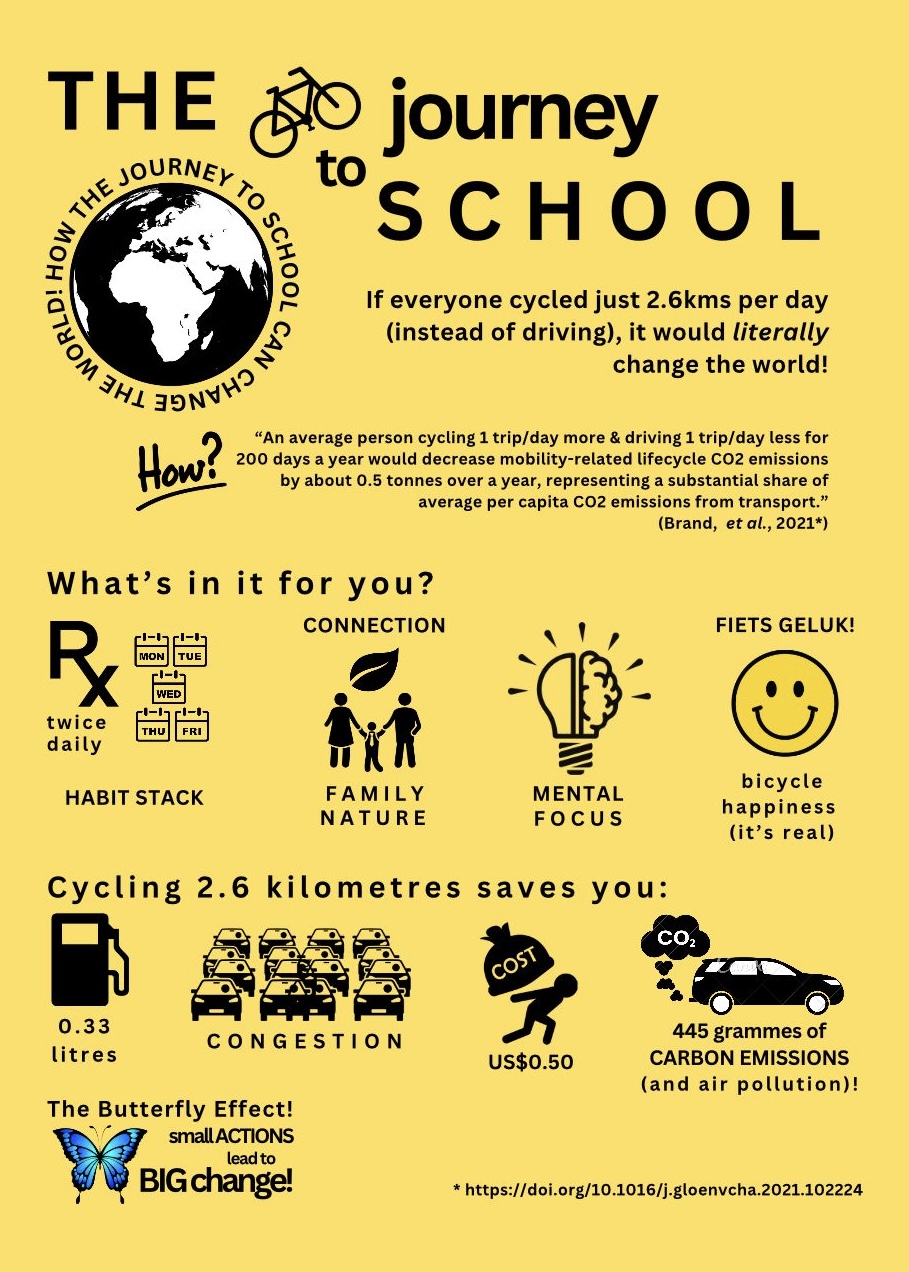
Transportation accounts for 25% of global carbon emissions. Let that sink in. As parents, we actively avoid putting our children in harm's way. Whether you believe in Climate Change, or not, there are huge benefits of mindfully living our lives within our planetary boundaries. And these co-benefits directly improve the lives of our children. Which parent doesn't want that? Knowing that fossil-fuel powered transportation currently accounts for 25% of global carbon emissions means that we can have huge impact by merely reevaluating our daily mobility options.
Did we consider what we lose when we choose cars? More importantly, did we in fact, choose? The built environment which is, and was created by people (read "men"), can be un-built. Who decided that taking a bus, or that walking or cycling to school was ___________ (fill in any thoughts: too slow, unnecessary, not good enough)? Whoever did, and whoever followed, signalled the status quo of designing a city for cars, and not for children. City planners received these messages which now mirror reality. More cars, means more crashes. We choose road crashes. Zimbabwe has one of the highest road death rates in the world: 41 people die for every 100,000. Parents witness daily aggressions in traffic, yet rarely question it. We complain about it. We don't question it. We are numb to road violence. This is weird, right? We don't accept that it is normal for our children to witness violence anywhere else in their lives. But, when it comes to car crashes it's all too common: we know someone who has had a crash; someone who has been injured or killed; or, that we have been in the car with our kids and seen one - and yet, we accept this as the norm.
The fact remains, most people have never considered alternatives to their current mobility in the City of Harare. Are there even any alternatives? That's a rhetorical question. You and I know there are. We just haven't implemented them. In Harare, those who can drive do so because their child is not safe to walk or cycle. And, those who have no option but to walk, cycle, or use a broken, informal public transportation system, do so knowing that they may be the next casualty. The most cited horror shared by bereaved parents is the life-shattering moment they hear the news that their child was hit and killed on the way to school. Life for these parents is never the same again. We must agree that no child should be injured or killed on their journey to school. Secondly, we must ask, who is going to stop this?
Whose responsibility is it to ensure that childhood mobility in the City of Harare is safe? How did we get here? And what is keeping us here? We are the proverbial frogs in simmering water, creatures of habit, with a tragedy of the commons unfolding. Do we agree that we need change? And what will it take? To make real change, we need to know what price we pay when we choose cars. Even if our children do not die on our roads, and even is no more children died on our roads, we must understand the trade-off for all of our children's childhoods when we choose cars.
Our built environment is designing out key features of child development in our city. Let's go back to those early years of our children's lives. Remember how we religiously marked those "firsts": journalling, photographing, videoing, celebrating. Remember our routine check-ups, the immunisations (and the BIG tears). The developmental checklists. Whilst we could rapidly see progress in the first days, months and years in our children's growth, it seems we let our guards down at five. That's natural. We had survived. They had survived. Life got easier. We got more sleep. Our children were thriving. The last milestone we may have noticed at around five years old (ok, so your child was faster) was learning to ride a bike. Another was the first day of school. Two developmental milestones congruously linked. A form of mobility (five times faster than walking), and a destination for their primary occupation.
A bicycle (don't get me started on how much I love this machine) is hands-down the most efficient form of transportation. So why does it matter if your child doesn't become proficient using this invaluable tool?
Independence. (A lot of wars have been fought for this.)
The foundation of independence for humans really starts to emerge in middle childhood. The stage from six to 12 years of age. It is a critical period for cognitive and socio-emotional development. Independent mobility, such as walking and cycling, broaden's a child's horizons allowing a child to foster social capital. Growing a child is hard. And as the old adage goes, "it takes a community". (It bloody-well does!)
A child’s development is dependent on regular experiences in safe and healthy environments with people they know, as well as those in their daily activities whom they can come to trust, and respect. The more diversity of people they encounter, the more they can form a sense of self. This, my friend, is where cities become safe places. The strangers we encounter become familiar. The street vendors, the toilet paper touts, the people starting or finishing their day of work. The other people on foot become the "eyes on the street" that found the very surveillance we need for raising our children, and keeping our streets safe. A child navigating their neighbourhoods to visit friends, or taking themselves off to school, learn their geographies whilst meeting and interacting with people in their immediate surroundings. This exposure to people from all walks of life helps a child to develop respect, trust and the notion of "community as a collective". This development iconically starts in childhood. Moving on.
So, why else does childhood mobility matter? The journey in a car becomes a means to an end – a disutility. Time spent in traffic is time wasted. The spaces in between our lives hold no meaning. We stand to miss out on the serendipity of life at a slower pace. Children learn to emulate these values. Setting a precedence in their own lives from lived experiences of what it means to be happy based on superficial parameters. Faster. Quicker. More. Now. The well-intended parental aspirations to do better (more things, less discomfort) is a disservice to a child’s developmental potential. The very real parodies of parenthood. One grounded in privilege displaying poverty of subliminal choice. The other of necessity, placing children in a dangerous 'playground' of cars. Who is poor? The child who sets out at their own pace, with friends, exploring nature, and learning consequences of their tardiness (late for school, missed meals, joy in the unexpected)? Or the child who is chaperoned in a weapon that injures or kills people whilst polluting the air, all-the-while kowtowing to a parent’s timetable and priorities?
So how do we move forward from here? How do we change the places in between our lives that are designed for cars, and automated to destroy childhoods?
If you have made it this far, maybe something has stirred. Discomfort? Recognition? I've walked you through the habits we've inherited, the choices we never really made, the psychological trade-offs we've normalised in the name of safety. I've shown you that independence isn't just a milestone - it's a right. That the built environment is not neutral. It is planned by someone who does not know what is best for our children. And that the journey to school isn't just a commute. It's a mirror reflecting what we value. This isn't about parental guilt, or climate anxiety. It is a moment to pause and ask:
What future are we building with each turn of the ignition?
What freedoms are we giving up in the name of protection?
From this point hereon, you get to decide what you will accept as a vision for childhood mobility in the City of Harare. Will your child survive, or thrive? And if you are wondering where to start? Start by walking.
(Disclaimer: "Where you stand shapes what you see.")